

Why olive wood kitchen utensils are more expensive — and why they're worth it
Daniel Woik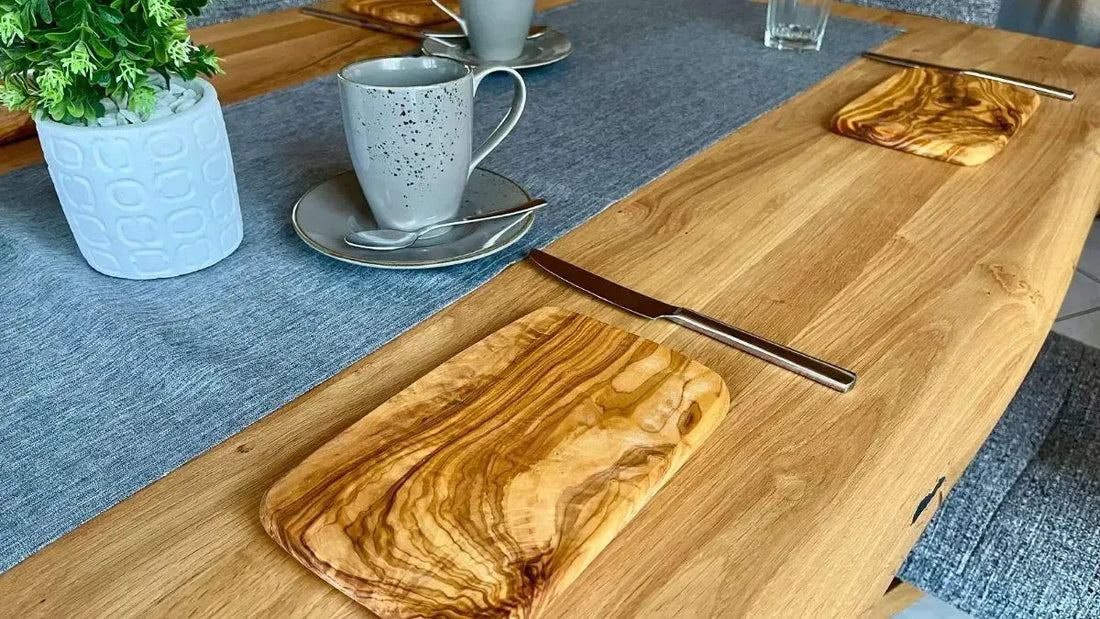
Many people who hold a cutting board, a wooden spoon or a salad bowl made of olive wood in their hands for the first time are impressed by the extraordinary grain and the warm play of colors. At the same time, the question often arises: Why do kitchen utensils made of olive wood cost more than products made from other types of wood?
In this article you'll learn why olive wood commands its price — and why it is still an investment that pays off in the long run.
Rare wood from decades of growth
Olive wood is one of the most precious and at the same time rarest woods in the world. The olive tree grows extremely slowly. On average it takes many decades for a tree to reach a significant trunk diameter. Unlike plantation woods like acacia or fast-growing bamboo, large quantities cannot be reproduced in a short time.
The wood is obtained exclusively from trees that have reached the end of their natural life or must be felled for agricultural reasons — for example because, after decades, they no longer bear fruit. This sustainable use is the reason why supply remains limited and the price rises.
Our olive wood kitchen utensils come from a traditional craft region around Sfax in Tunisia. The olive trees there grow in dry soils and under intense sunlight. The result: particularly dense growth rings and an exceptionally robust wood structure that is appreciated worldwide.
Labor-intensive processing instead of industrial mass production
Besides limited availability, the processing of the wood plays a central role in the price. While other woods can be easily machined, olive wood is a challenge due to its hardness and irregular grain.
Each kitchen utensil is created in several elaborate steps. First the wood is slowly and carefully dried to avoid cracks. It is then cut by hand and brought into rough shapes. Only after that follows the careful sanding in many work steps until all edges are perfectly smoothed.
The final treatment with natural olive oil or food-safe vegetable oil is also done by hand. Oiling gives the surface its warm sheen and keeps it permanently protected. This craftsmanship not only ensures quality but also accounts for the higher price compared to machine-produced kitchen helpers made of commodity wood or plastic.
Distinctive grain: each piece is unique
A characteristic feature of olive wood is its unique grain. No cutting board is like another — the wavy lines, color transitions and contrasts are created by decades of growth.
This natural beauty cannot be artificially produced or imitated. Every kitchen utensil is a genuine one-off. Choosing a product made of olive wood brings a piece of natural history into the kitchen — with an individual look that delights both modern and classic kitchens alike.
Particularly robust and durable
Olive wood is one of the hardest woods in Europe. Its high density makes it extremely resistant to cuts, pressure and moisture. With proper care, a cutting board or wooden spoon made of olive wood can last for decades without becoming brittle or warping.
Compared to cheaper alternatives made of bamboo or acacia, olive wood products prove to be significantly more durable in everyday use. They withstand intensive use, are more cut-resistant and absorb hardly any odors. Especially those who cook or bake often benefit from this robust quality.
Many customers report that they have used their olive wood utensils daily for many years — and that they become even more beautiful over time.
Antibacterial properties for better hygiene
Another advantage that makes olive wood a valuable material is its natural antibacterial effect. Studies show that germs and bacteria hardly survive on the dense, oil-rich surface of olive wood.
That means: even without chemical coatings, the wood remains hygienic. This aspect is particularly important for cutting boards and kitchen tools that come into daily contact with food.
With regular care — for example by oiling — the protective effect is maintained permanently.
Sustainability through mindful use
In times of growing environmental impact, sustainability plays a decisive role in the choice of kitchen utensils. Olive wood meets several criteria here:
- No felling of healthy trees: only old trees are processed.
- Resource conservation: the high durability reduces waste and the need for replacement products.
- Short transport routes: production takes place entirely in the Mediterranean region, not overseas.
- Natural finishing: without chemical varnishes or sealants.
Those who choose olive wood decide on a product that is created in harmony with nature and tradition and that saves resources in the long term through its durability.
A piece of Mediterranean culture in your own kitchen
Olive wood is much more than a practical material — it stands for Mediterranean lifestyle, enjoyment and craft culture. For centuries, artisan families in Tunisia, Greece and Italy have been making kitchen utensils from this noble wood.
Every product bears the marks of traditional manufacturing techniques and the story of decades of tree growth. In this way a cutting board or a wooden spoon made of olive wood becomes a special companion in everyday life — and a beautiful symbol of quality and mindfulness.
Conclusion: quality that pays off
Olive wood kitchen utensils are not only more expensive, but also more valuable than many other products. Their unique appearance, exceptional durability, natural hygienic properties and sustainable origin make them a conscious choice for quality and craftsmanship.
Anyone who has experienced how olive wood feels in the hand and how it becomes more beautiful over time understands why it is worth every cent.
Tip:
Would you like to learn more about the proper care of olive wood? In our guide we show you how to clean and care for cutting boards and kitchen utensils so that they bring you joy for decades: Caring for olive wood properly.


